

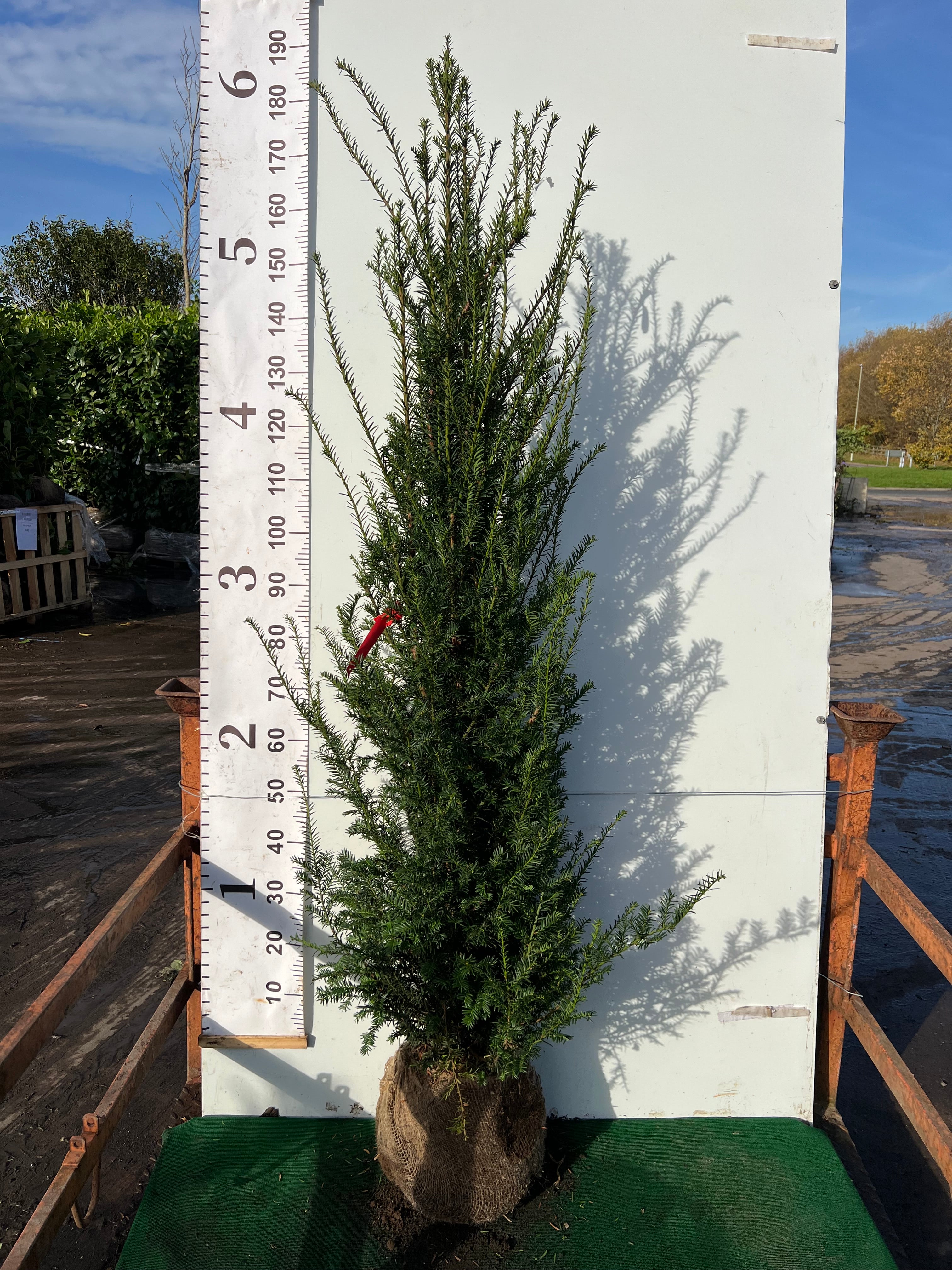
How Our Plant Heights Are Measured
All heights listed refer to planted height and do not include the pot or rootball


English Yew (Taxus Baccata) Rootball 150-180cm - Premium Quality, Unbeatable Price
- Regular price
-
£75.00 - Regular price
-
£100.00 - Sale price
-
£75.00
𝟮𝟱% 𝗢𝗙𝗙 𝗘𝗩𝗘𝗥𝗬𝗧𝗛𝗜𝗡𝗚 𝗙𝗢𝗥 𝗟𝗜𝗠𝗜𝗧𝗘𝗗 𝗧𝗜𝗠𝗘
EXTRA 10% OFF FOR ORDERS OVER £500
𝗧𝗼 𝗗𝗲𝗹𝗮𝘆 𝗗𝗲𝗹𝗶𝘃𝗲𝗿𝘆 - 𝗣𝗹𝗮𝗰𝗲 𝗢𝗿𝗱𝗲𝗿 𝗔𝗻𝗱 𝗦𝗲𝗻𝗱 𝗨𝘀 𝗔𝗻 𝗘𝗺𝗮𝗶𝗹
- FREE nationwide delivery on orders over £400
- Orders £150–£399.99 — £30.00 nationwide
- Orders under £150 — £19.00 nationwide
- Free local delivery on orders over £200 (LE postcodes only)
- In-stock items delivered within 1–3 working days. Tracking provided on dispatch.
Couldn't load pickup availability
Planting calculator
Free Delivery over £400 - see all rates
To Delay Delivery Till After Hosepipe Ban - Place Order And Send Us An Email
We currently ship within the United Kingdom mainland only.
Unfortunately we're unable to deliver to offshore islands and Highlands.
Delivery Times
- In-stock items: Usually delivered within 1–3 working days.
- Oversized items (standard trees and other plants over 2.5m): Delivery may take up to 14 working days.
- Items to special order: Usually within 21 days, however you will be given an ETA at the point of placing your order.
Shipping Rates
- Orders £0.00 – £149.99 → £19.00
- Orders £150.00 – £399.99 → £30.00 nationwide
- Orders £400.00 and above → Free Shipping
- Free local deliveries for orders over £200 (LE postcodes only)
To Delay Delivery Till After Hosepipe Ban - Place Order And Send Us An Email
Returns policy
Because plants are perishable, the standard 14-day cooling-off period under the Consumer Contracts Regulations 2013 does not apply. Instead, we offer a 1-day return window from the date of delivery.
If you notice any issues with your plants, please contact us within 24 hours of delivery and provide clear photographs so we can assist you promptly.
Plants must be returned in their original condition, ideally using the same courier service. Return shipping costs are your responsibility unless the item is confirmed as faulty or not as described.




Product Details
✓ Hand-selected specimens with robust root systems
✓ Instant privacy & faster establishment
✓ Premium grade – trusted by professional landscapers
Unlike some competitors, our rootball height is a true planted height – measured from the top of the rootball to the top of the plant
Always leave the hessian sacking in place on rootball plants – it will naturally degrade over time
EXTRA 10% OFF AND PAY JUST £67.50 PER PLANT
When your total basket value exceeds £500 before the extra discount. Buy 7 or more of these plants, or combine with other products to qualify. Pallet deals count towards the £500 threshold but do not receive the extra discount.
Planting density: 2 plants per metre (50cm apart)
Compost required: 1 full 60L bag per plant
Bonemeal required: 175g per plant (~8 plants per 1.5kg bag)
🌿 Taxus baccata – English Yew
Rootballed | Evergreen | Formal & Long-Lived
A timeless evergreen renowned for its dense foliage, classic form and exceptional longevity.
English Yew (Taxus baccata) is a premium evergreen choice for formal gardens, screening and structured landscaping. With its rich dark-green foliage and naturally dense growth, it provides year-round interest and can be clipped into a wide range of shapes. Supplied rootballed, it is ideal for planting as hedging, screening or as a feature within a formal garden design.
✨ Features & Benefits
- Classic Evergreen: Dense, dark-green foliage provides year-round colour and structure.
- Excellent for Screening: Naturally dense growth makes it ideal for privacy and boundary planting.
- Highly Versatile: Suitable for hedges, topiary, formal borders and specimen planting.
- Long-Lived: A traditional British evergreen valued for its exceptional longevity.
- Easy to Shape: Responds well to regular clipping for a neat, formal appearance.
🌱 Care Instructions
- Light: Thrives in full sun to partial shade.
- Water: Keep well-watered during establishment, particularly through dry periods.
- Soil: Prefers well-drained soil but adapts to a wide range of garden conditions.
- Pruning: Clip in late spring or summer to maintain the desired shape and density.
- Hardiness: Fully hardy throughout the UK and well suited to exposed locations.
📏 Product Details
- Plant: Taxus baccata (English Yew)
- Supply: Rootballed for direct planting
- Form: Dense evergreen tree/shrub suitable for formal planting
- Foliage: Rich, dark-green, needle-like foliage
- Growth: Slow to moderate, with excellent response to pruning
🌿 Why You’ll Love It
English Yew is a true classic for creating elegant, permanent garden structure. Its dense evergreen foliage, impressive longevity and ability to be shaped make it equally suited to traditional estates, contemporary landscapes and formal screening schemes.
Planting Tips
💧 Watering – Essential for Success
Consistent watering is vital from day one. Ambient rainfall is rarely sufficient, especially in the first season after planting. Water deeply and regularly to help roots establish — this is the main condition of our plant guarantee. Plants that are allowed to dry out may fail to establish and will not be covered under warranty.
Rootballed Plants
Handle rootballed plants with care and do not remove the hessian sacking, netting, or metal wire around the rootball. These materials are designed to hold the root system together during planting and will naturally break down in the soil. Simply place the rootball in the prepared planting hole, making sure it sits at the same depth it was previously growing. Backfill with soil, firm in gently, and water thoroughly.
Potted Plants
Remove the plant carefully from its pot and lightly tease out any circling roots before planting. Place it in a hole slightly larger than the pot, ensuring the top of the rootball is level with the surrounding soil. Backfill, firm in gently, and water generously.
Trees & Tall Plants
When planting trees or taller plants, always provide a strong stake or support for at least the first growing season. This helps the roots establish firmly and prevents wind damage. Position the stake on the windward side and secure the stem loosely with a soft tie, allowing for slight movement.
Need more help?
Have you got any questions? Feel free to contact us.
Email: info@hedgingsupplies.co.uk
Phone: 01509 270 943